Remodeling Deposit and Contract Rules in 10 States and DC
How much a remodeler may take before work starts, what the written contract must include and how long you have to cancel, from the laws of California, Pennsylvania, Maryland, Florida, New York, Virginia, Arizona, Minnesota, Washington, Wisconsin and DC, plus the federal three-day rule.
Updated
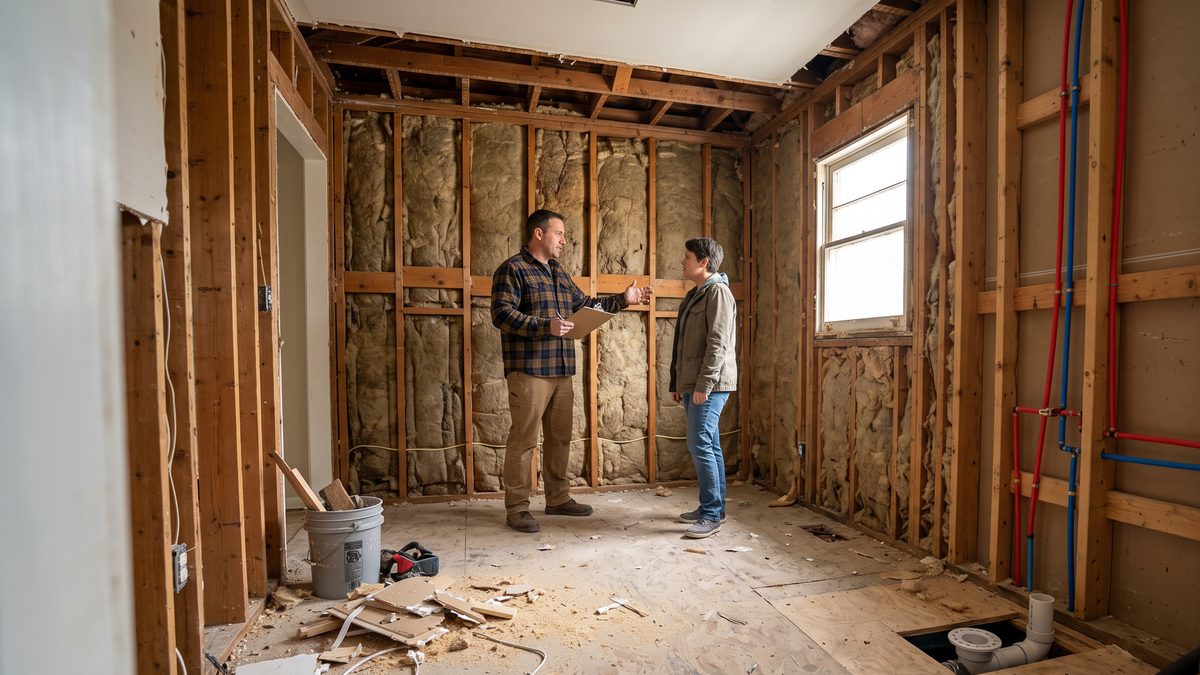
Before a remodeler orders a single cabinet, a few states already limit what it can take from you and spell out what its contract has to say. Pick your state, type the contract price and the deposit you were asked for, and the checker answers with the rule as it is written in that state's law.
What the contract must say
Changing your mind
Who enforces it
Signed at the kitchen table: the federal three-day window
A Federal Trade Commission rule lets you cancel a sale of $25 or more that you agree to at your home, even when you invited the salesperson in. You have until midnight of the third business day, and Saturdays count as business days while Sundays and federal holidays do not. The company has to hand you two copies of a cancellation form when you sign, and if you cancel it must return your payments within ten business days.
The rule does not cover a deal you negotiated first at the company's showroom, a real emergency where you write and sign your own waiver, or a visit you asked for to repair or service your belongings, such as an appliance. A remodel contract you sign at home after an in-home estimate fits its definition. Some states give more, such as Pennsylvania, where you can cancel within three business days wherever you signed, and California, where buyers 65 and older get five.
Paying as the walls go up, not before
California says payments after the deposit cannot run ahead of the value of the work done. New York says the schedule must bear a reasonable relationship to the work, the materials bought or other costs of the job, and the Attorney General advises holding the final payment until the work is finished and the required inspections are signed off. Virginia makes the contract list the amount and schedule of each progress payment, and Arizona the stage of construction that triggers each one.
A schedule that follows the job is easy to check: one payment when rough plumbing and electrical pass inspection, another when cabinets or tile are in, the last after the final inspection. For a project with several trades, the general contractors on our lists run the schedule and the permits. Our guide to kitchen and bathroom remodel costs shows what 138 companies publish for the job itself.
If your state is not on the list
We include a state only after reading its rule in the statute, the regulation or the official page of the agency that enforces it. Texas, Georgia, Illinois, Colorado, North Carolina, Ohio, Massachusetts and the other states where RemodelRank has lists are not in the checker yet. Some of them have rules of their own, so the absence of a state here does not mean anything goes. The federal three-day window applies everywhere, and your state attorney general's consumer office can tell you what else applies. A house built before 1978 adds a federal rule of its own, explained on our page about lead paint and remodeling.
Where each rule in the checker was read
Every rule comes from the text of the law or from the official page of the agency that enforces it, read on November 14, 2026: the Federal Trade Commission rule in 16 CFR Part 429, the California Contractors State License Board and its consumer guide to home improvement contracts, Pennsylvania's Home Improvement Consumer Protection Act, Maryland's Business Regulation Article §8-501 and §8-617, Florida Statutes §489.126 and §489.1425, the New York Attorney General's home improvement fact sheet, Virginia's 18VAC50-22-260, Arizona's §32-1158, Minnesota's §326B.809, Washington's RCW 18.27.114, the Wisconsin consumer protection bureau's guide to ATCP 110 and the sample contract of DC's Department of Licensing and Consumer Protection. The checker names the source under each answer.
This page explains rules, it is not legal advice, and a contract dispute is a question for the agency named in the checker or a lawyer in your state. Where the data on RemodelRank comes from.